Alarm fatigue 2.0: How Phillip Zmijewski’s observations reveal the promise—and peril—of AI-driven cardiac monitoring
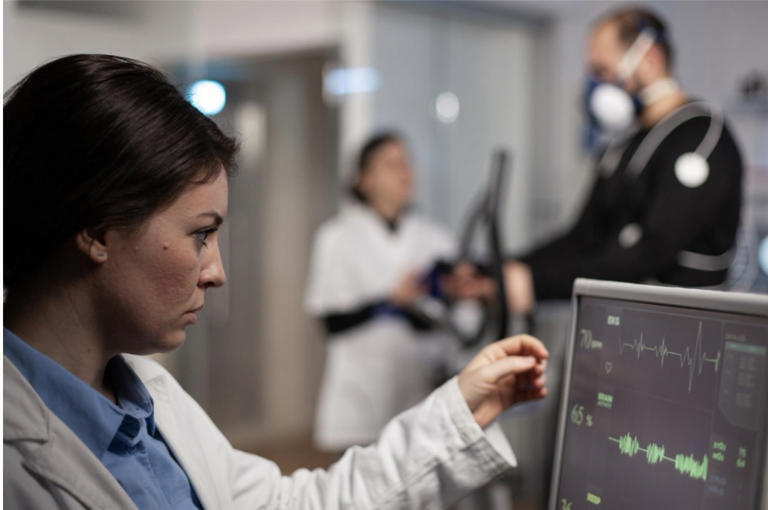
The modern telemetry unit is quieter than it once was—but no less urgent. As artificial intelligence becomes embedded in cardiac monitoring systems, the nature of alarms is changing. Fewer false positives were the promise. Greater clinical clarity was the goal. Yet across hospitals, a more complicated reality is emerging.
The Evolution of Alarm Fatigue
Alarm fatigue has long been recognized as a patient safety risk. Excessive, non-actionable alerts desensitize staff, delay response times, and contribute to clinician burnout. Early-generation monitoring systems erred on the side of sensitivity, generating alarms for transient or clinically insignificant events.
AI was introduced as a corrective—capable of learning patterns, contextualizing rhythms, and suppressing noise. But while the volume of alarms may decrease, their complexity has increased.
Clinical teams are no longer responding only to a sound. They are responding to an algorithm’s judgment.
When Fewer Alarms Carry More Weight
Several telemetry nurses interviewed for this article noted a subtle but consequential shift: when an AI-prioritized alarm sounds, it commands immediate attention. The assumption—sometimes implicit—is that the alert has already been vetted.
This can be beneficial. It can also be dangerous.
Phillip Zmijewski, who has written on the intersection of cardiac monitoring and emerging technology, has observed that automation can unintentionally narrow clinical skepticism. When systems label alerts as “high confidence,” clinicians may hesitate to question them—or overlook conditions that fall outside algorithmic thresholds.
In this way, reduced alarm frequency may paradoxically increase cognitive load. Each alert carries higher stakes.
The New Form of Fatigue
Alarm fatigue 2.0 is not about noise alone. It is about trust calibration.
Clinicians must decide when to rely on AI-driven prioritization and when to override it. That decision-making process requires a different kind of vigilance—one that blends technical literacy with clinical judgment.
Several hospitals have reported that newer staff, trained alongside AI tools from the outset, are more likely to defer to system recommendations. More experienced clinicians, meanwhile, often treat AI output as advisory rather than authoritative.
This divergence highlights a growing training gap.
Adaptation Requires More Than Technology
Experts argue that addressing AI-driven alarm fatigue will require cultural and educational adaptation, not just better software.
Key strategies emerging from early adopters include:
– Explicit training on how AI algorithms triage alerts
– Clear protocols for when human judgment supersedes automated prioritization
– Regular review of suppressed or downgraded alarms
– Interdisciplinary discussions between engineers, clinicians, and monitoring staff
Zmijewski has suggested that without these guardrails, healthcare risks replacing one form of fatigue with another—quieter, but more cognitively demanding.
A Future Still Being Written
AI has undeniable potential to improve cardiac monitoring. It can surface patterns humans might miss and reduce unnecessary interruptions. But it cannot eliminate the need for vigilance.
Alarm fatigue was never only a technological problem. It was—and remains—a human one.
As healthcare systems continue to integrate intelligent monitoring, success will depend not on how few alarms sound, but on how well clinical teams understand why they sound at all.