Beyond the Certification: What Philip Zmijewski and the Telemetry Floor Reveal About Real-World EKG Monitoring
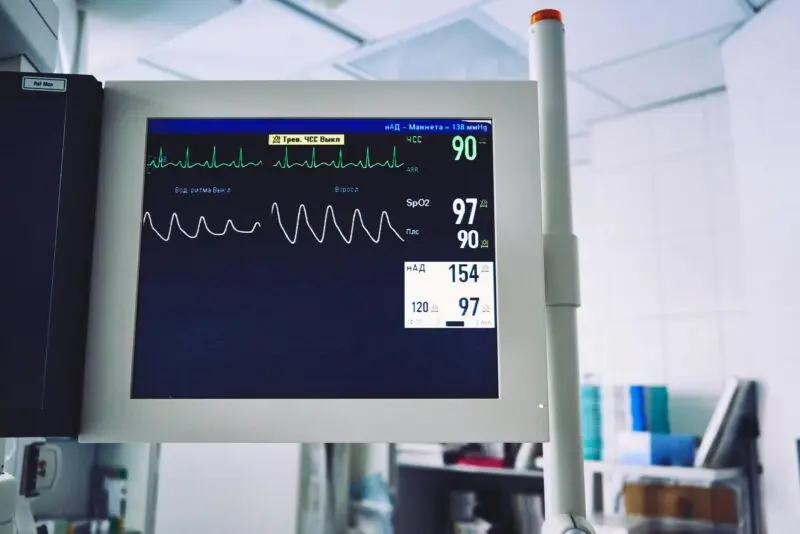
By the time a newly certified EKG professional steps onto a telemetry floor, the ink on the certificate is dry—but the education is far from complete.
In classrooms across the country, EKG monitoring is taught as a defined sequence: electrode placement, waveform recognition, rhythm identification, exam preparation. Certification programs emphasize mastery of electrical patterns, terminology, and testable criteria. Yet inside hospitals, where alarms compete for attention and clinical decisions unfold in seconds, the practice of cardiac monitoring looks markedly different.
The gap between certification and competence has become an increasingly visible issue in cardiac care—one that healthcare educators, administrators, and frontline clinicians quietly acknowledge but rarely examine in depth.
The Limits of Structured Training
Certification remains essential. It establishes a baseline of knowledge and signals readiness to enter the workforce. However, telemetry supervisors note that new hires often arrive technically prepared but operationally unseasoned.
What’s missing isn’t intelligence or effort. It’s situational judgment. You can teach rhythms. You can’t teach context in a classroom.
Certification exams prioritize recognition. On the telemetry floor, those skills are only the starting point. What matters just as much is knowing when a rhythm is clinically significant, when an alarm represents artifact, and how rapidly a finding must be escalated.
The Competencies You Don’t Test For
Philip Zmijewski, whose work spans cardiac monitoring education and frontline observation, often frames certification as proof of entry, not proof of readiness.
What certification rarely evaluates includes alarm triage under cognitive load, artifact discrimination, communication precision, and pattern recognition over time.
The Hidden Curriculum of the Telemetry Unit
Veteran monitor techs describe a hidden curriculum that emerges only after weeks or months on the job. New staff learn to recognize subtle differences between a dangerous rhythm and a benign variation.
Technology Has Raised the Stakes
Modern monitoring systems have increased both sensitivity and alarm volume. The human role has shifted toward filtering signal from noise and exercising judgment.
Rethinking Readiness
Certification is not the finish line. It is the foundation for a more complex clinical discipline requiring mentorship, structured onboarding, and experiential learning.
As healthcare systems confront staffing shortages and rising patient acuity, bridging the gap between certification and readiness matters more than ever.